?unique=4d62f6d)
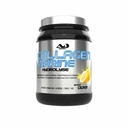
Addict Collagen Marine Hydrolyse
🐟 8637mg of hydrolysed fish collagen per 10g serving
🍋 180mg of vitamin C (225% NRV) — essential cofactor for collagen synthesis
💧 25mg of sodium hyaluronate per serving — for joint lubrication and skin hydration
🦴 Supports joints, tendons, ligaments, skin, hair and nails
🌊 Marine-sourced hydrolysed collagen — superior absorption vs bovine collagen

What is Collagen Marine Hydrolysé by Addict Sport Nutrition?
Collagen Marine Hydrolysé is a three-ingredient structural supplement by Addict Sport Nutrition combining hydrolysed fish collagen (8637mg per serving), vitamin C (180mg) and sodium hyaluronate (25mg) in a daily 10g powder dose. Designed for athletes who subject their connective tissues to repeated mechanical stress, and for anyone seeking proactive structural health support, it addresses joint, skin, tendon, ligament and cartilage health simultaneously in a single daily dose.
Marine collagen — sourced from fish — is type I collagen, the most abundant collagen type in the human body and the primary structural protein in skin, tendons, ligaments, bone and cartilage. The hydrolysis process breaks down native collagen into smaller peptides (collagen peptides or collagen hydrolysate), typically 2000 to 5000 daltons in size, that are absorbed directly through the intestinal wall into the bloodstream. From there, they accumulate in connective tissues and stimulate fibroblasts — the cells responsible for producing new collagen — to increase endogenous collagen synthesis. This mechanism means that consuming hydrolysed collagen is not simply providing amino acid building blocks: it actively signals the body to produce more structural protein.
Marine collagen has a particular advantage over bovine collagen in bioavailability: its smaller average particle size means faster and more complete intestinal absorption, with studies suggesting marine collagen peptides reach target tissues more efficiently than their bovine equivalents.
The 180mg of vitamin C per serving (225% of the EU NRV) is not an afterthought — it is a physiologically essential component of the formula. Vitamin C is a required cofactor for prolyl hydroxylase and lysyl hydroxylase, the two enzymes that stabilise the collagen triple helix structure. Without adequate vitamin C, newly synthesised collagen cannot form properly and is rapidly degraded. The inclusion of 225% NRV ensures that vitamin C is never the limiting factor in collagen synthesis, regardless of dietary intake.
Sodium hyaluronate (25mg) rounds out the formula as a glycosaminoglycan that attracts and retains water in joint fluid, cartilage and skin tissue, contributing to joint lubrication and skin hydration from within.
Available in 300g (lemon flavour) providing 30 daily servings.
Marine collagen. Vitamin C. Hyaluronate. Skin, joints and connective tissue in one scoop.
| Flavour | Lemon or Tropical |
| Brand | Addict |
| Size | 300 gr |
How Collagen Marine Hydrolysé by Addict Sport Nutrition supports your objectives
🦴 Joint and cartilage support for high-load athletes Hydrolysed collagen peptides accumulate in cartilage tissue and stimulate chondrocytes and fibroblasts to produce new collagen matrix. Research in active adults and athletes has shown that regular collagen peptide supplementation contributes to joint comfort and cartilage integrity, particularly relevant for athletes who perform high-impact or repetitive-load training (running, weightlifting, jumping sports) where articular cartilage is subjected to accelerated mechanical wear.
💪 Tendon and ligament structural support Collagen is the primary structural protein in tendons and ligaments, which are among the slowest-healing connective tissues in the body due to their limited blood supply. Hydrolysed collagen supplementation, particularly when taken 30 to 60 minutes before exercise, has been shown in research to increase collagen synthesis in tendon tissue during the post-exercise period — making it one of the most practically relevant supplements for tendon injury prevention and management in athletes.
✨ Skin elasticity, hydration and youthful appearance Type I marine collagen is the dominant collagen type in dermal tissue. Daily supplementation with hydrolysed marine collagen has been studied extensively for its effects on skin hydration, elasticity and the reduction of fine lines, with the most consistent results observed after 8 to 12 weeks of daily use. The combination of collagen peptides and sodium hyaluronate in this formula addresses both the structural protein component and the hydration component of skin tissue simultaneously.
💧 Sodium hyaluronate for joint lubrication and deep hydration Hyaluronic acid (sodium hyaluronate) is a natural glycosaminoglycan that can bind up to 1000 times its weight in water. In joints, it forms the viscous synovial fluid that lubricates articular surfaces and acts as a shock absorber. In skin, it maintains the extracellular matrix hydration that gives tissue its plumpness and resilience. The 25mg of sodium hyaluronate per serving contributes to both functions from within.
🍊 180mg of vitamin C — the essential collagen synthesis catalyst Vitamin C is not optional in a collagen formula — it is biochemically required. Without it, the proline and lysine residues in newly synthesised collagen chains cannot be hydroxylated, preventing the formation of the stable triple helix that gives mature collagen its structural strength. The 180mg per serving (225% NRV) ensures this enzymatic step is never limited, maximising the return on every gram of collagen peptide consumed.
🎯 Goal guide
🏋️ Mass gain: 1 serving/day. Protects joints and tendons under progressive overload and heavy training volume.
🔥 Weight loss / cutting: 1 serving/day. Maintains connective tissue integrity during high-frequency, high-rep training.
⚖️ Body recomposition: 1 serving/day. Structural support for sustained, high-intensity training cycles.
Serving suggestion
Mix 2 level scoops (10g total) in 200 to 300ml of cold water or your preferred drink. Stir or shake until fully dissolved. The lemon flavour is designed to complement water or fruit-based drinks naturally. Consume once per day. For athletes specifically targeting tendon and ligament support, research suggests consuming the serving 30 to 60 minutes before training to maximise collagen synthesis in connective tissue during the post-exercise window.
Best times to enjoy it
🏋️ 30 to 60 minutes before training (for tendon and joint support) The most research-supported timing for connective tissue benefits: collagen peptides taken before exercise increase the availability of collagen precursors in tendon and ligament tissue during and after the mechanical loading of training, amplifying the collagen synthesis stimulus provided by exercise itself.
🌅 Morning on an empty stomach An alternative effective timing for skin and general connective tissue benefits. Taking collagen first thing in the morning with vitamin C ensures fast absorption and early availability of collagen peptides before the day's metabolic demands consume other amino acid substrates.
🍵 In a warm drink Hydrolysed collagen dissolves well in warm water, herbal tea or warm lemon water. The lemon flavour pairs naturally with these options and the warmth does not degrade the collagen peptides.
📅 Every day, including rest days, for a minimum of 8 to 12 weeks Collagen synthesis and tissue remodelling are slow, cumulative processes. Meaningful structural benefits typically become perceptible after 8 to 12 weeks of consistent daily supplementation. Consistency of use over time is more important than precise daily timing.
Daily protein target reminder
Collagen Marine Hydrolysé is a structural supplement, not a complete protein source. Collagen is rich in glycine, proline and hydroxyproline but is devoid of tryptophan and low in several other essential amino acids, making it an incomplete protein that cannot substitute for dietary protein or whey/plant protein supplementation. For muscle growth and overall protein needs, current sports nutrition science recommends 1.6 to 2.2g of protein per kg of body weight per day from complete sources.
| Body weight | Min. target (1.6g/kg) | Max. target (2.2g/kg) |
|---|---|---|
| 55 kg | 88g/day | 121g/day |
| 65 kg | 104g/day | 143g/day |
| 75 kg | 120g/day | 165g/day |
| 85 kg | 136g/day | 187g/day |
| 95 kg | 152g/day | 209g/day |
Goal-specific guidance
For athletes under high training load: Prioritise pre-training consumption (30 to 60 minutes before the session) to leverage the exercise-amplified collagen synthesis window. Combine with a post-workout complete protein source (whey, plant protein) to ensure both connective tissue support (collagen) and muscle protein synthesis (complete EAA profile) are addressed in the same training day.
For athletes focused on skin, hair and nail health: Morning consumption on an empty stomach or with breakfast is the most practical protocol for cosmetic-oriented collagen benefits. Results in skin elasticity and hydration are most commonly reported after 8 to 12 weeks of consistent use at 10g per day, with some studies showing continued improvement up to 24 weeks.
🏅 Sport Nutrition "Did you know?"
Collagen makes up approximately 30% of all protein in the human body — making it the most abundant protein we have. Yet despite this, it is often absent from sports nutrition discussions that focus heavily on muscle protein (primarily actin and myosin). The reality is that connective tissue — tendons, ligaments, cartilage, fascia — is almost entirely made of collagen, and these structures adapt to training loads far more slowly than muscle tissue. The mismatch between how quickly muscles adapt (weeks) and how slowly tendons remodel (months to years) is actually one of the primary reasons for overuse injuries in athletes who progress training loads quickly. Marine collagen supplementation is one of the few evidence-based strategies that directly targets the slower-adapting connective tissue side of this equation.
Full ingredient list
Hydrolysed fish collagen, acidifier: citric acid, flavouring, vitamin C (ascorbic acid), sodium hyaluronate, sweetener: sucralose.
Key ingredient breakdown
| Ingredient | Amount per 10g serving | Role |
|---|---|---|
| Hydrolysed fish collagen | 8637mg | Primary active ingredient; marine type I collagen peptides for connective tissue, joint, skin, tendon and ligament support |
| Vitamin C (ascorbic acid) | 180mg | Essential cofactor for collagen triple helix formation; antioxidant protection; 225% NRV per serving |
| Sodium hyaluronate | 25mg | Glycosaminoglycan for joint lubrication, synovial fluid quality and skin hydration |
| Citric acid | — | Natural acidulant for flavour balance and pH stability |
| Flavouring | — | Natural lemon aroma |
| Sucralose | — | Zero-calorie sweetener; no aspartame |
Allergens and certifications
Allergens: Contains fish (hydrolysed fish collagen). Always refer to the product label for the most current allergen information. Not suitable for individuals with fish or seafood allergies.
Product characteristics:
- Marine-sourced type I collagen from fish
- No aspartame — sweetened with sucralose only
- Not suitable for vegans or vegetarians (fish-derived collagen)
- Not suitable for individuals with fish allergies
- Part of the Addict Sport Nutrition Santé & Bien-être range
Nutritional values per serving
| Active ingredient | Per 10g serving | % NRV* |
|---|---|---|
| Hydrolysed fish collagen | 8637mg | — |
| Vitamin C (ascorbic acid) | 180mg | 225% |
| Sodium hyaluronate | 25mg | — |
*NRV: EU Nutrient Reference Value. No NRV established for collagen or sodium hyaluronate.
Bottle duration guide
| Format | Net weight | Servings (at 10g/day) |
|---|---|---|
| Standard | 300g | 30 servings (1 month) |
Q1 — What is the difference between marine collagen and bovine collagen? Both marine and bovine collagen supplements provide type I collagen peptides, which are the primary structural collagen in skin, tendons, ligaments and bones. The key difference is bioavailability: marine collagen peptides are smaller in average molecular size than bovine collagen peptides, which means they are absorbed more quickly and efficiently through the intestinal wall. Marine collagen also has a higher concentration of hydroxyproline, one of the key amino acids in collagen's triple helix structure. For athletes prioritising absorption efficiency, marine collagen has a practical advantage over bovine alternatives.
Q2 — Why does this formula contain 225% NRV of vitamin C? The 225% NRV dose of vitamin C is not an excess — it is a physiological necessity. Vitamin C is a required cofactor for the enzymes that stabilise newly synthesised collagen (prolyl hydroxylase and lysyl hydroxylase). Without adequate vitamin C, collagen chains cannot form the stable triple helix structure that gives mature collagen its mechanical strength. By including 180mg per serving — well above the baseline NRV — the formula ensures this enzymatic step is never the limiting factor in collagen synthesis, regardless of dietary vitamin C intake on any given day.
Q3 — Is Collagen Marine Hydrolysé suitable for vegans? No. The collagen is derived from fish, making this product unsuitable for vegans and vegetarians. There is currently no commercially available marine plant-based collagen — collagen is an animal protein with no true plant equivalent. Vegans who want to support collagen synthesis can focus on dietary precursors (vitamin C, glycine, proline, copper, zinc) and plant-based supplements that provide these building blocks, but cannot supplement collagen itself from vegan sources.
Q4 — Can I take Collagen Marine Hydrolysé alongside a protein powder? Yes, and this is actually the recommended approach for athletes. Collagen provides glycine, proline and hydroxyproline for connective tissue synthesis, but is an incomplete protein (lacking tryptophan and low in several EAAs). A complete protein source (whey, plant protein) provides the full essential amino acid profile needed for muscle protein synthesis. Using collagen pre-workout for tendon and joint support, and a complete protein post-workout for muscle recovery, addresses both the connective tissue and muscle sides of recovery comprehensively.
Q5 — How long does one 300g bottle last and when will I notice effects? One 300g bottle provides 30 servings at 10g per day — exactly one month of daily use. Meaningful improvements in joint comfort and skin hydration are most consistently reported after 8 to 12 weeks of continuous daily supplementation, meaning a minimum 3-month protocol (3 bottles) is recommended before drawing conclusions about individual response. Some athletes report reduced joint stiffness and improved exercise comfort within 4 to 6 weeks. Skin effects (hydration, elasticity) are typically reported after 8 to 12 weeks.