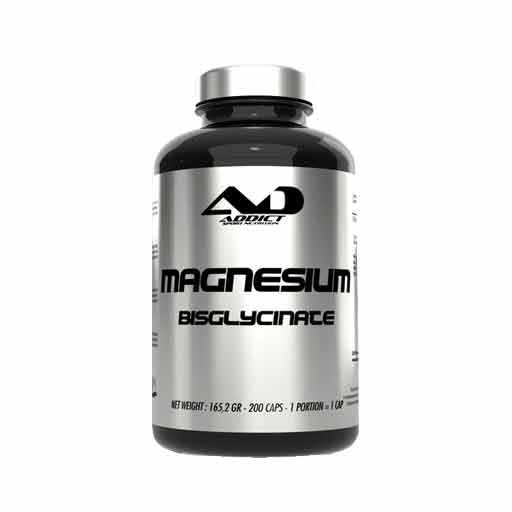
Addict Magnesium Bisglycinate
💊 104mg of elemental magnesium per capsule — bisglycinate chelated form
🔬 Highest bioavailability of all magnesium forms — superior to oxide and citrate
🫶 10 EU-authorised health claims including fatigue, muscles, nerves and sleep
💆 Excellent digestive tolerance — no laxative effect, no intestinal irritation
📅 200 capsules — 200-day supply at 1 capsule/day (over 6 months)

What is Magnesium Bisglycinate by Addict Sport Nutrition?
Magnesium Bisglycinate by Addict Sport Nutrition is a premium magnesium supplement delivering 104mg of elemental magnesium per capsule in the bisglycinate form — the chelated form of magnesium with the highest bioavailability and best digestive tolerance available. Each bottle contains 200 capsules, providing a full 200-day supply at the recommended dose of 1 capsule per day: one of the most economical long-term magnesium supplementation formats on the market.
Magnesium is one of the most important and most commonly deficient minerals in the human body. It is a required cofactor in over 300 enzymatic reactions, involved in everything from ATP production and protein synthesis to neuromuscular function, nerve signal transmission and DNA repair. Despite its critical importance, studies consistently show that a significant proportion of the population — and athletes in particular — do not meet daily magnesium requirements through diet alone. Athletes are especially susceptible to magnesium depletion because intense exercise and sweating accelerate magnesium losses through both sweat and urine.
What distinguishes magnesium bisglycinate from standard magnesium supplements is the chelation: the magnesium ion is bound to two glycine molecules, forming a stable ring structure that is recognised by the intestinal wall as an amino acid complex rather than a mineral salt. This dramatically increases absorption efficiency compared to cheaper forms like magnesium oxide (poorly absorbed, commonly causes loose stools) and even compared to magnesium citrate (well-absorbed but can have a mild laxative effect). The bisglycinate form is absorbed through amino acid transporters in the gut rather than the less efficient mineral ion channels, resulting in higher plasma magnesium levels from the same dose.
Available in a 200-capsule format, with a simple once-daily protocol taken at breakfast.
The most bioavailable magnesium. The gentlest on digestion. The longest supply.
| Brand | Addict |
| Packaging | 200 Caps |
How Magnesium Bisglycinate by Addict Sport Nutrition supports your objectives
⚡ Normal energy metabolism — fuel for over 300 enzymatic reactions Magnesium is a required cofactor in every step of the ATP synthesis pathway, including glycolysis, the citric acid cycle and oxidative phosphorylation. Without adequate magnesium, energy production efficiency declines measurably, manifesting as fatigue, reduced physical output and mental sluggishness. Every cell in the body depends on magnesium-dependent enzymatic reactions to produce its energy — making magnesium one of the most foundational micronutrients for both physical and cognitive performance.
💪 Normal muscle function and reduced cramping Magnesium plays a direct role in muscle contraction and relaxation by regulating calcium influx into muscle cells. During contraction, calcium enters; during relaxation, magnesium opposes calcium and promotes the release of the contracted state. Low magnesium levels disrupt this balance, leading to excessive muscle tension, cramps and impaired recovery. Athletes who experience frequent cramps or muscle tightness are among the most likely to benefit from correcting magnesium status.
🧠 Normal nervous system function and psychological wellbeing Magnesium acts as a natural NMDA receptor antagonist, modulating the activity of the central nervous system's primary excitatory neurotransmitter (glutamate). Adequate magnesium levels help maintain a balanced nervous system, reducing hyperstimulation, anxiety-like states and the mental fatigue that accumulates with chronic stress or high training loads. Magnesium also contributes to normal psychological function and is one of the most studied micronutrients in the context of stress resilience and mood regulation.
😴 Relaxation and sleep quality support Magnesium bisglycinate is particularly valued for its calming properties. The glycine component of the chelate contributes independently to relaxation and sleep quality — glycine is an inhibitory neurotransmitter that has been shown to improve subjective sleep quality and reduce daytime fatigue. Combined with magnesium's own role in nervous system regulation, the bisglycinate form provides a uniquely complete sleep-support effect that other magnesium forms cannot replicate.
🦴 Normal bone and dental health Magnesium is essential for the regulation of calcium metabolism and the crystallisation of hydroxyapatite in bone tissue. Approximately 60% of the body's total magnesium is stored in bone, where it plays a structural and regulatory role. Adequate magnesium intake is associated with higher bone mineral density and reduced fracture risk — a long-term consideration for athletes who subject their skeletal system to repeated mechanical loading.
🎯 Goal guide
🏋️ Mass gain: 1 capsule/day at breakfast. Supports protein synthesis, energy metabolism and muscle function under high training load.
🔥 Weight loss / cutting: 1 capsule/day. Compensates for magnesium depletion accelerated by caloric restriction and high training frequency.
⚖️ Body recomposition: 1 capsule/day. Foundation micronutrient support for sleep quality, recovery and neuromuscular function.
Serving suggestion
Take 1 capsule per day with a large glass of water at breakfast. Taking magnesium with a meal improves tolerability and supports absorption. Do not exceed the recommended daily dose of 1 capsule. Food supplements should be used within the context of a varied and balanced diet and a healthy lifestyle.
Best times to enjoy it
🍳 With breakfast (recommended) The brand-recommended timing. Taking magnesium at breakfast with food ensures consistent absorption and builds a reliable daily habit. It also ensures the glycine component is available throughout the day for its broad metabolic functions.
🌙 In the evening as an alternative Many practitioners recommend magnesium bisglycinate in the evening, as the combined calming effects of magnesium and glycine may support the transition to sleep. If sleep quality or stress management is the primary concern, an evening protocol before dinner is equally effective and widely used.
📅 Every day, including rest days Magnesium is water-soluble and excreted continuously in urine and sweat. There is no meaningful storage buffer — daily intake is required to maintain adequate plasma and tissue magnesium levels. Skipping supplementation on rest days creates the same depletion risk as skipping on training days.
❄️ Year-round, with heightened importance during high training loads Sweat losses of magnesium are significant during intense or prolonged exercise. Athletes in preparation phases, competition seasons or high-volume training blocks should ensure consistent daily magnesium intake is never interrupted.
Daily protein target reminder
Magnesium Bisglycinate is a micronutrient supplement, not a protein source. For training adaptations to fully materialise, adequate daily protein intake remains essential. Current sports nutrition science recommends 1.6 to 2.2g of protein per kg of body weight per day for active individuals. For vegan athletes, targeting the upper end (1.8 to 2.2g/kg) is advised.
| Body weight | Min. target (1.6g/kg) | Max. target (2.2g/kg) |
|---|---|---|
| 55 kg | 88g/day | 121g/day |
| 65 kg | 104g/day | 143g/day |
| 75 kg | 120g/day | 165g/day |
| 85 kg | 136g/day | 187g/day |
| 95 kg | 152g/day | 209g/day |
Goal-specific guidance
For athletes under high training load: Prioritise consistent daily supplementation throughout the training cycle without interruption. Magnesium depletion is cumulative — several days of deficit during a high-volume training block can produce measurable performance and recovery impairments. The 200-capsule format is specifically designed for athletes who want to maintain continuous supplementation over a 6-month period without the cost or inconvenience of frequent repurchasing.
For stress management and sleep: Take the daily capsule in the evening before dinner rather than at breakfast. The glycine component of the bisglycinate chelate contributes to relaxation and sleep quality through its own inhibitory neurotransmitter activity, complementing the nervous system-calming properties of magnesium itself. Consistent evening use over 4 to 8 weeks typically produces the most noticeable improvements in sleep quality and stress resilience.
🏅 Sport Nutrition "Did you know?"
Magnesium deficiency is the second most common micronutrient deficiency in the world after iron — and it is overwhelmingly silent. Unlike iron deficiency, which produces measurable anaemia, magnesium deficiency rarely produces obvious clinical signs until it becomes severe. Instead, it manifests as vague, non-specific symptoms: chronic low-grade fatigue, mild anxiety, muscle tension, poor sleep quality, reduced exercise tolerance and difficulty concentrating. These are precisely the symptoms that athletes most commonly report and most commonly attribute to overtraining, insufficient sleep or stress. In a significant proportion of cases, correcting magnesium status with a highly bioavailable form like bisglycinate resolves or substantially improves these symptoms within 4 to 8 weeks of consistent daily supplementation.
Full ingredient list
Magnesium bisglycinate, gelatin (capsule shell), colourant: iron oxide and iron hydroxide (E172).
Key ingredient breakdown
| Ingredient | Role |
|---|---|
| Magnesium bisglycinate | Active ingredient; chelated magnesium bound to two glycine molecules for superior bioavailability and digestive tolerance |
| Gelatin (capsule shell) | Animal-derived encapsulation agent; not suitable for vegans or strict vegetarians |
| Iron oxide and iron hydroxide (E172) | Inert colourant for capsule identification; no physiological activity |
Why bisglycinate is the superior form — comparison table
| Magnesium form | Bioavailability | Digestive tolerance | Notes |
|---|---|---|---|
| Magnesium oxide | Very low (~4%) | Poor — commonly causes loose stools | Most common in cheap supplements |
| Magnesium citrate | Good | Moderate — mild laxative effect possible | Better than oxide; widely used |
| Magnesium bisglycinate | Very high | Excellent — no laxative effect | Absorbed via amino acid transporters |
Allergens and certifications
Allergens: No major allergens declared. Always refer to the product label for the most current allergen information.
Product characteristics:
- Chelated bisglycinate form — maximum bioavailability
- Excellent digestive tolerance — no laxative effect
- No artificial flavourings or sweeteners
- Not suitable for vegans or vegetarians (gelatin capsule)
- Part of the Addict Sport Nutrition Santé & Bien-être range
Active ingredient per capsule (daily serving)
| Active ingredient | Per capsule | % NRV* |
|---|---|---|
| Magnesium (as magnesium bisglycinate) | 104mg | 28% |
*NRV: EU Nutrient Reference Value (375mg/day for magnesium)
EU-authorised health claims for magnesium (all applicable)
Magnesium contributes to:
- Reduction of tiredness and fatigue
- Electrolyte balance
- Normal energy-yielding metabolism
- Normal functioning of the nervous system
- Normal muscle function
- Normal protein synthesis
- Normal psychological function
- Maintenance of normal bones
- Maintenance of normal teeth
- The process of cell division
Bottle duration guide
| Daily dose | Capsules per day | Bottle duration |
|---|---|---|
| Standard | 1 capsule/day | 200 days (~6.7 months) |
Q1 — Why is bisglycinate a better form of magnesium than oxide or citrate? Magnesium oxide is the most common form in inexpensive supplements but has very low bioavailability (approximately 4%) and frequently causes loose stools or digestive discomfort. Magnesium citrate is better absorbed but still uses mineral ion transport channels in the gut that have limited capacity, and can have a mild laxative effect at higher doses. Magnesium bisglycinate is absorbed through amino acid transporters — the same high-capacity channels used to absorb dietary protein — which are significantly more efficient and not subject to the same saturation limits. The result is more magnesium absorbed per milligram consumed, with no digestive side effects.
Q2 — How long before I notice the effects of magnesium bisglycinate? Effects on energy levels and fatigue reduction are typically noticeable within 2 to 4 weeks of consistent daily use, as plasma magnesium levels normalise and the enzymatic systems that depend on magnesium reach full operational efficiency. Effects on sleep quality and stress resilience may take 4 to 8 weeks to become clearly perceptible. Magnesium works cumulatively by restoring and maintaining adequate tissue stores — it is not an acute supplement with immediate effects. Consistent daily intake is far more important than precise timing.
Q3 — Is 104mg per capsule enough? The EU NRV for magnesium is 375mg/day, and the 104mg per capsule represents 28% of this reference value. For individuals who obtain magnesium through a varied diet (dark leafy greens, nuts, seeds, whole grains, legumes), a daily supplement providing 100 to 150mg can be sufficient to maintain adequate status. For athletes with higher losses through sweat, or for individuals with dietary gaps, 2 capsules per day (208mg, 55% NRV) may be more appropriate. Consult a physician or dietitian for personalised dosing, particularly if blood magnesium levels are known to be low.
Q4 — Is Magnesium Bisglycinate suitable for vegans? No. The capsule shell is made from gelatin, which is an animal-derived ingredient. The magnesium bisglycinate itself is synthetically produced and vegan-compatible, but the gelatin capsule makes the overall product unsuitable for vegans and strict vegetarians. Athletes seeking a vegan magnesium bisglycinate supplement should look for a product using HPMC (hydroxypropylmethylcellulose) capsules.
Q5 — Can I combine Magnesium Bisglycinate with other supplements? Yes. Magnesium is safe to combine with the vast majority of sports nutrition and health supplements. One particularly important consideration: calcium and magnesium compete for the same intestinal absorption transporters when taken together. For optimal magnesium absorption, avoid taking this supplement at the same time as calcium-rich supplements or large dairy-based meals. A 2-hour separation between calcium and magnesium supplementation is generally recommended. Magnesium pairs well with zinc, vitamin B6 and vitamin D, and is a natural complement to the ZMA formula from the same Addict Sport Nutrition range.